Wednesday, January 27, 2010

The Diversity in Clarkston

I currently live in the perfect nonplace of Lilburn, Georgia. This city is the very representation of the suburban areas that are portrayed in movies or on TV, where there is a "perfect" community of people living in harmony. In your dreams, this is the place where you wanted to grow up in and where you want to raise your kids in. In essence, Lilburn is the place where you feel "normal"; however, for the last twelve years of my life, I always missed, for some reason I can't explain, living in a place like Clarkston.


When my parents first came to America from India, a relative suggested that they live Clarkston because it easily provided an area where my parents could start their new lives. From then on and continuing until I was six, my parents stayed in that city, took advantages of various opportunities, and lived happily. As a kid, though, I never like it there. The buildings were too old, the city was too congested, and the lifestyle was below average. Nevertheless, I got my wish and moved to a suburban area, but after a while, I realized that I never appreciated the city as it was.

You heard of Clarkston in one of our readings for class, an essay by Sally Jenkins, where it mentions that the city that houses one of the largest refugee resettlements in the nation. In the 1990s, refugee resettlement programs made Clarkston a home for displaced people of many different backgrounds. Several ethnics groups were also attracted to the city because of the city's location right outside of the core of Atlanta. According to the 2000 census, the racial makeup of the city is as follows:
  • African Americans - 56%
  • Caucasian - 19%
  • Asian - 13%
  • Hispanic/Latino - 4.61%
  • Other races - 3%
  • Two or more races - 10%
As seen by the numbers, Clarkston truly is a ethnic melting pot. In the 2000s, the local high school had students from more than 50 different countries. From these facts, you should probably be able to figure out why Clarkston is a place. I agree with Jenkins in that the city does foil the stereotype of the South, and in a way, it helps build a new Southern identity because the ethnic groups "have revitalized the region’s business and spiritual life" (Jenkins).

Music City, Cashville, Nashville

I was born in San Francisco but I consider Nashville to be where I'm from. I moved to Memphis when I was 1 and to Nashville when I was 4, so Nashville is the only place I really remember. Nashville is a place without a doubt, according to Walker Percy. Just about everyone knows of Nashville because of all the country music that is recorded there. It is home to the Grand Ole Opry, Country Music Hall of Fame, and the only full-scale replica of the Parthenon. There are many famous people that live in Nashville and you see them around the city all the time. For how well it's known, Nashville isn't that big. There are only about 1.5 million in the city and surrounding area. Nashville has a lot to offer, especially music-wise, and is not too crowded. Nashville is home to the Titans (football) and the Predators (Hockey), so there is a fairly decent sport scene as well. Nashville is sometimes called Music City (obviously for all the music there) or Cashville (for Johnny Cash). Also, Nashville hosts the Country Music Association Awards (CMA Awards).


Contrast


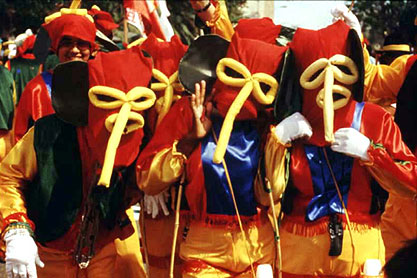
I have experienced both, living in a place and in a nonplace. I was born in Colombia in a tiny, but very recognized city called Barranquilla. I lived there for the first 12 years of my life. Barranquilla is in the coastal part of Colombia and is known by its famous Carnival, which everybody should attend once in their lifetime. It is a huge celebration, even causing schools and important government issues to come to a halt. As in America, Colombia is divided into stereotypes. The people from the Coastal area labeled as joyful, partiers, and kind of lazy. The coast is recognized for being home to the most beautiful beaches and cultural cities of Colombia, such as Cartagena. The other stereotype that exists is for the people from the interior of Colombia. They are portrayed as serious, educated, and boring. I consider Barranquilla a place, because as Walker Percy's essay "Why I live and Where I live" pointed out, people from Barranquilla carry in their shoulders all the traditions and history that the city and its surroundings have embedded in them. After 12 years, when I moved to the United States, I lived in a new, small city called Weston. Weston is located in South Florida, 40 minutes from Miami, which I consider a place, and was established in 1996, 14 years ago. When I first went to Weston, I realized it looked like paradise. It is full of big green palms and trees, the streets were broad and royal, and it had an empty atmosphere. I consider Weston a nonplace because although it had a resemblance of being perfect, it seemed fake. Something that characterizes Weston is how nothing interesting occurs. There is no news, no crime, and by 10 p.m. the streets are empty. Don't get me wrong though, in both cities I have had pleasant experiences and I am emotionally attached to both, but I would consider Barranquilla the place that contributed to my cultural preferences and makes me in many ways how I am. This is why, if anybody asks me if I was characterized by the place I was born/raised in, under no hesitation would I respond, "Yes."

The picture at the top is of Weston and the picture at the bottom is of the 'marimondas' from the Carnival of Barranquilla.

Saturday, January 23, 2010

Topic #1


Hello! This is Hye Jin. So I'm the first one to introduce the topic. Because it is the first topic and we don't know each other very well, I was thinking what topic would relate to our class discussion and somehow introduce ourselves.

After reading Walker Percy's essay "Why I live and Where I live", I have thought about my life and said that I have mostly lived in a place and once in nonplace, based on Percy's definition of place and nonplace.

I was born in Seoul, South Korea but lived there for about 7 years total. I have lived in Chennai, India for 8 years and 3 years in Irvine, CA. I was also in Kiev, Ukraine last summer because my parents lived there at that time. In my opinion, Seoul, Chennai and Kiev is a place. These cities are huge and are full of history of the country. The modern building and the historical buildings in major parts of the city blend with each other very well.


(left is Seoul, center is Chennai, and right is Kiev)


However, Irvine, in my opinion is a nonplace. Irvine is a suburb that does not have unique and historical architects. It is a city that clearly differentiate residential area and shopping area. Automobile is required to go some where. The main reason why Irvine is known to people is because of its academics. Although my father's workplace was 30 minutes drive from Irvine, my father wanted our family to live in Irvine because of my high school academics. Due to the high reputation of academics, a lot of Asians currently live in Irvine. About 50 % of my high school students were Asians. Because of the increase in population and more malls coming in to the city, it might be considered as a place. Nevertheless, most suburban people tend to live on their own inside their houses, according to my observation. There was no interaction between neighbors.
Yeah, so that's how I defined the cities I lived to place and nonplace. So the topic for this week is to introduce where you have lived throughout your life and discuss if it was a place or a nonplace.


Thursday, January 21, 2010

The Stereotypical Southern

By Ryan Dettmann

When people think of the stereotypical southern identity, many think of several things such as football, pickup trucks, hunting, alcohol, and possible a good ole southern draw. Before we had even gotten this assignment there were several ideas and stereotypes that came to mind about views on southern culture which included the ones mentioned before. So when we got the assignment I found a youtube video that further skews people's views on the people of the south.


This is a video about a man who bet his tv on the Washington Redskins winning against the New Orleans Saints and sadly lost. Now his friends are cashing in on that bet. He explains also in the video what they might do and show what they actually do, which is shoot up his tv while having some beers by their pickups and big southern accents. This video offers a stereotypical view of the south as a bunch drunk guys or hillbillies shooting up a tv over a football game. This is not what I view most the south as but it does show strengthen people's stereotypes that its a bunch of unintelligent drunk people who are not very smart have nothing better to do than shoot up a tv and this is shown in the video.

Though many people could view this video as a representation of the south, for me it does not accurately portray the it. Not everybody shoots up their friends tv, or drink beer and shoot up things, or even have pick-up trucks (though many Americans do). Though I do believe that many people live by football or other sports, this is true all over the world like europe with soccer. Although this video wrongly portrays southerners as a bunch of drunk stupid rednecks, some underlying things are popular in the South like football.


Wednesday, January 20, 2010

Stone Mountain


Hey! Since I live five minutes (literally) from Stone Mountain Park, it's really easy for me to say that this landmark really defines my representation of the South. If you didn't know, Stone Mountain is not really a mountain, but a large piece of granite rock; however, more importantly, you should know the history of it in order to understand the South.

The most recognizable feature of the mountain is the sculpture of Confederate Memorial Carving, which depicts the three Confederate leaders of the Civil War, President Jefferson Davis and Generals Robert E. Lee and "Stonewall" Jackson. This idea originally came from the organization of the United Daughters of the Confederacy (UDC), an association dedicated to honoring the memory of those who served and died in service to the Confederacy. The organization believed that there was no justice done to those Southerners who fought for what they believed them throughout the war. By 1915, the mountain gave birth to the second Klu Klux Klan, who used the site for Klan rallies. In 1924, the new Klan, which included many members of the UDC, were able to influence the federal government to issue special fifty-cent coins with Robert E. Lee and "Stonewall Jackson".

As seen through its history, those ideas that were the cause of the creation of Stone Mountain were not specific to one area, city or state, but instead those ideas reflect the ideas of the entire South. Just as the UDC created a memorial of Confederate Civil War heroes, the South, in general, still supported the ideas that the Confederacy fought for. Even today, many Southerners have so much respect for those Confederate leaders that it could compare to respect of those UDC members that influenced the special fifty-cent coins. The point I'm making is the history that Stone Mountain provides accurately portrays the ideas that existed in that time and even today. I hope that if you go to Stone Mountain, you will feel that you have somehow experienced the South.

Black, Brown and White

When this assignment was announced, I asked around if anyone knew an inspirational representation of the South. I came across a song called "Black, Brown and White" by Big Bill Broonzy.

Big Bill Broonzy was an African American blues songwriter and singer in the Jim Crow Era. In this song he narrates situations the African Americans were placed in, such as the fact that they were paid less than a white person was paid although they did the same job.

I think this song encompasses many of the situations in the South that we discussed in class when going over the essay "The ethics of Living Jim Crow" by Richard Wright. He mentions how he would not be served any beer or wine because of the color of his skin.

In fact, it focuses on all the injustices that African Americans passed through during this era. Towards the end of the song he mentions how slavery ended, but now he asks : “What you gonna do about the old Jim Crow?” I think this song is a good representation of the South during this era because it informs how African Americans had to work hard and still did not receive what they deserved.


Angelica Grillo